The CoCon systems conforms to IEC 61603 part 7 (for 24 channels), the international standard for digital infrared transmission of audio signals for conference use and similar applications.
The CoCon system can use a maximum of ten infrared bands, each band can have up to four channels. The maximum amount of channels on your system depends on the license you have (6, 12 or 40 channels).
The quality mode of the audio determines the amount of channels available per band. Higher quality audio can take up two or four channels. You can combine different audio qualities on one band.
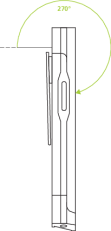
The positioning of the receiver relative to the radiator(s) has an effect on how efficiently you will receive a signal. For maximum sensitivity aim the back side of the receiver (the side with the clip) directly towards the radiator. When you tilt the receiver this will reduce the sensitivity of the receiver. The receiver has a 270° wide reception angle.
Figure 1-7 The reception angle of the CoCon receiver
Ambient lighting can disturb the distribution of the infrared signal. For this reason the CoCon system should not be used in outdoor conditions or in rooms with very bright lightning.
Different elements present in the room can effect the infrared signal transmission. Most objects reflect infrared, with the exception of dark and rough surfaces that absorb a large portion of the infrared signal. Infrared will not pass trough objects that are opaque to visible light, therefore it is important to position your radiators carefully.
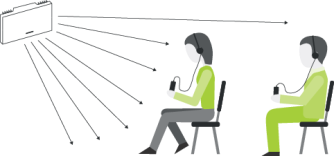
Figure 1-8 Effect of positioning the radiator too low, preventing people sitting in further rows from picking up the infrared signal
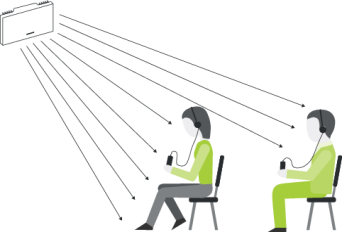
Figure 1-9 Correct position of the radiator, participants on all rows can pick up the infrared signal
If the venue permits it, the receiver can pick up reflected infrared radiation as well as direct radiation. The radiation can be reflected by the wall, floor or other objects present in the room.
Every radiator has a certain reach. This is the area that can receive the infrared radiation, this is called the footprint of the radiator. The footprint of the radiators depends on the position of the radiator as well as the amount of channels used.
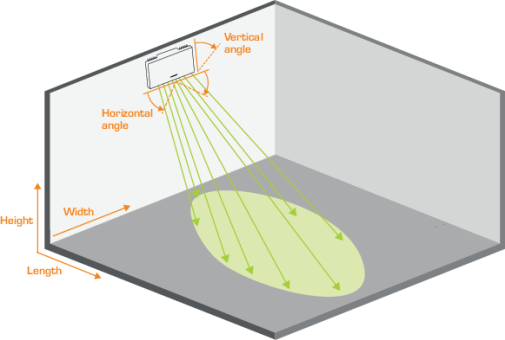
Figure 1-10 The footprint of the radiator and the physical parameters that influence the footprint
The position of the radiator is determined by the following parameters:
For a detailed description of how these parameters effect the footprint see "Position the CoCon components" on page 1.
The amount of channels can also change the footprint of the radiator. When you have more than four, eight, twelve, etc. channels, this will drastically reduce the size of the radiator footprint.
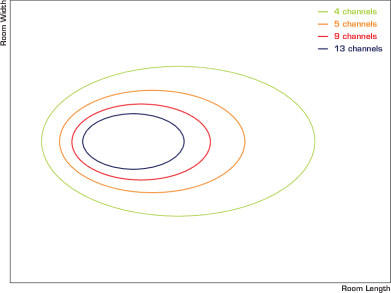
Figure 1-11 The effect of the amount of channels on the footprint of the radiator
When there are multiple radiators in a room, the footprints of the different radiators can overlap. If these radiators are connected to the transmitter with cables having different lengths then the signal will reach the radiators at a different time. This mismatch will results in the reduction or canceling of the infrared signal (in places where the IR signal of the radiatiors have equal strength), thus creating black spots. For more information see